

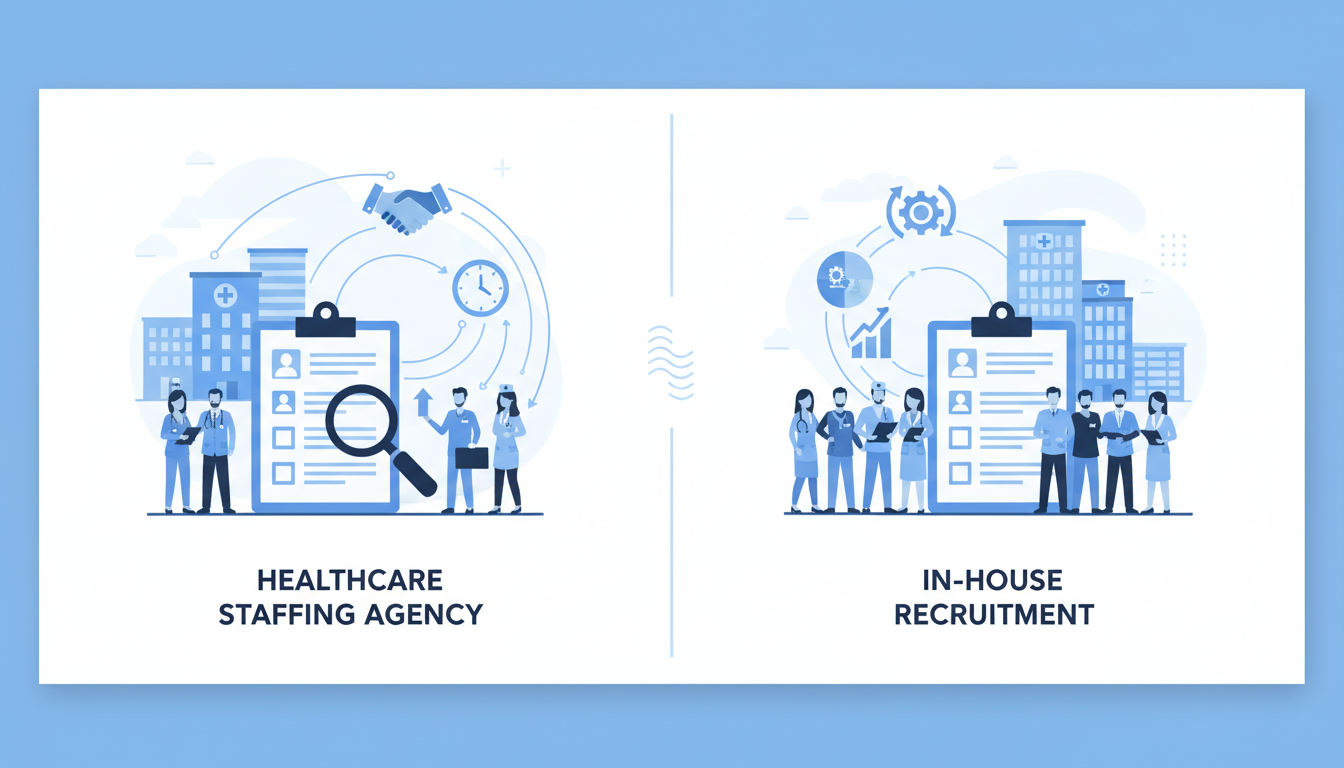
Finding qualified healthcare professionals is a major priority for hospitals, nursing homes, rehabilitation centers, clinics, and other healthcare organizations. When a position becomes available, facility managers typically have two main options: manage recruitment internally or work with a specialized healthcare staffing agency.
Both approaches have advantages. The right choice depends on factors such as hiring volume, urgency, available resources, and long-term workforce goals. Understanding the differences can help healthcare leaders choose a recruitment strategy that works best for their organization.
What Is In-House Healthcare Recruitment?
In-house recruitment means the healthcare organization manages the entire hiring process using its own HR or recruitment team. This typically includes advertising positions, reviewing applications, conducting interviews, verifying qualifications, completing background checks, and onboarding new employees.
Advantages of In-House Recruitment
One major advantage is direct control over the recruitment process. Internal teams are already familiar with the organization’s culture, policies, departments, and expectations.
In-house recruitment can also work well when a facility has a stable hiring pipeline and regularly recruits for similar positions. Over time, an internal team can develop a strong understanding of the organization’s workforce requirements.
However, internal recruitment also requires considerable time and resources, particularly when healthcare positions are difficult to fill.
What Is a Healthcare Staffing Agency?
A healthcare staffing agency specializes in finding and placing qualified healthcare professionals. Depending on the agency, facilities may receive temporary, per diem, travel, contract, or permanent staffing support.
Staffing agencies typically maintain candidate networks and recruitment systems that allow them to identify professionals for specific healthcare roles.
Advantages of Using a Staffing Agency
One of the biggest advantages is speed. When a facility has an urgent vacancy, an established staffing agency may already have qualified candidates available.
Agencies can also reduce the workload on internal HR teams by handling much of the sourcing and initial screening process.
Additional benefits can include:
- Access to a larger candidate pool
- Faster recruitment
- Flexible staffing options
- Support during staffing shortages
- Assistance with credential verification
- Temporary and permanent placement options
These benefits can be particularly valuable when facilities are experiencing high turnover or unexpected increases in patient demand.
Comparing the Two Approaches
In-house recruitment may be appropriate when an organization has a strong HR department, predictable hiring needs, and sufficient time to manage the recruitment process.
A staffing agency may be more suitable when positions need to be filled quickly, specialized professionals are difficult to find, or the facility requires temporary workforce support.
The decision does not have to be either-or. Many healthcare organizations use both approaches.
Why a Hybrid Strategy Can Work
A hybrid recruitment strategy combines internal hiring with external staffing support. Permanent positions can continue to be managed by the organization’s HR team, while a staffing agency can provide additional support during periods of high demand or recruitment difficulty.
For example, a nursing home may use its internal team to recruit permanent nurses while working with a staffing agency to cover open shifts until permanent employees are hired.
This approach provides flexibility without replacing the organization’s existing recruitment function.
What Should Healthcare Leaders Consider?
Before choosing a recruitment approach, facility managers should evaluate:
- How quickly the position needs to be filled
- Availability of qualified candidates
- Internal recruitment capacity
- Hiring volume
- Workforce budget
- Temporary versus permanent requirements
- Specialized skill requirements
The most effective strategy is the one that balances candidate quality, hiring speed, workforce flexibility, and long-term organizational needs.
Conclusion
There is no universal answer to whether healthcare staffing agencies or in-house recruitment is better. Internal recruitment provides control and organizational familiarity, while staffing agencies can provide speed, flexibility, and access to a broader talent pool.
For many healthcare organizations, combining both approaches creates the most resilient recruitment strategy.
If your organization needs qualified healthcare professionals for temporary or permanent positions, CareFix Staffing can provide flexible healthcare staffing solutions designed around your facility’s workforce requirements.