

Nurses have several career options beyond traditional full-time positions. Two popular choices are travel nursing and per diem nursing. Both offer flexibility and opportunities to work in different healthcare settings, but they differ in scheduling, compensation, job stability, and career development.
Understanding these differences can help nurses choose a work arrangement that fits their professional goals and personal circumstances.
What Is Travel Nursing?
Travel nursing involves taking temporary assignments at healthcare facilities that need additional nursing staff. These assignments often last around 8 to 13 weeks, although the duration can vary depending on the facility’s needs and the contract.
Travel nurses may work in hospitals, rehabilitation centers, long-term care facilities, and other healthcare environments. Some accept assignments in different states, while others prefer to stay closer to home.
Travel nursing can be a good option for nurses who enjoy experiencing new workplaces, meeting different teams, and developing their clinical skills in varied settings.
What Is Per Diem Nursing?
Per diem nursing, sometimes called PRN nursing, allows nurses to work shifts when healthcare facilities need additional coverage. Instead of committing to a fixed weekly schedule, nurses generally accept shifts based on their availability and the facility’s requirements.
Per diem nurses may cover weekends, holidays, unexpected absences, or periods of high patient demand. They can sometimes work at multiple facilities, depending on employer policies and scheduling arrangements.
This option appeals to nurses who want greater control over their working hours, including those balancing family responsibilities, education, or another job.
Travel Nursing vs. Per Diem Nursing: Key Differences
1. Pay and Compensation
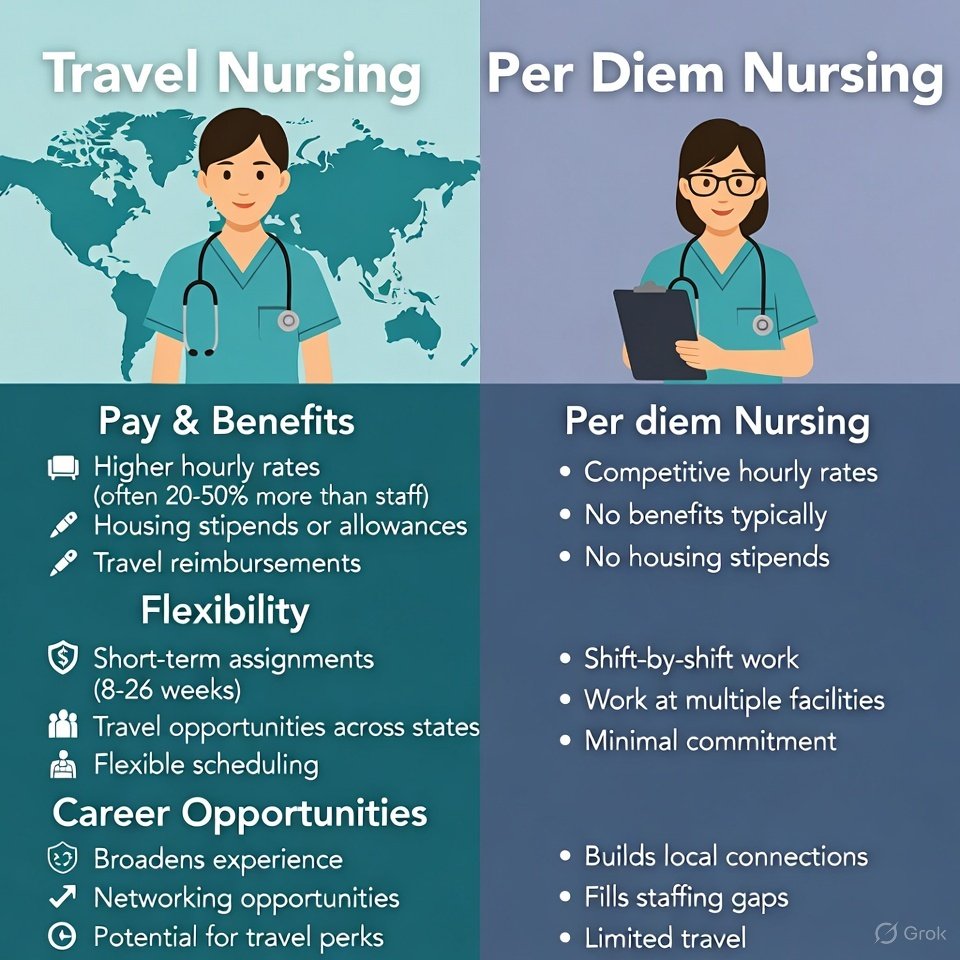
Travel nursing assignments may offer attractive compensation packages, particularly in locations experiencing staffing shortages or high demand for specialized nurses. Depending on the contract, compensation may include hourly wages, housing support, travel reimbursement, or other benefits.
However, travel nursing pay varies by location, specialty, assignment length, and market conditions. Housing costs, taxes, and eligibility requirements can also affect the overall financial benefit.
Per diem nurses may receive higher hourly rates than some permanent staff because they provide flexible coverage. However, they may not receive paid time off, health insurance, retirement contributions, or guaranteed hours.
The important point: Compare the total compensation package rather than looking at the hourly rate alone.
2. Scheduling and Flexibility
Per diem nursing usually offers more control over which shifts a nurse accepts, although available shifts and employer requirements can limit that flexibility. Nurses may be able to work only on selected days or pick up extra shifts when needed.
Travel nursing provides flexibility in choosing assignments and destinations, but once a contract begins, nurses are generally expected to follow the agreed schedule.
For nurses who want to choose individual shifts, per diem work may be a better fit. Those who prefer a defined temporary assignment with an opportunity to experience a new location may prefer travel nursing.
3. Job Stability and Predictability
Travel nursing provides a defined assignment period, which can make it easier to plan work for several weeks or months. However, future assignments are not guaranteed, and contract extensions depend on the facility’s needs.
Per diem work offers flexibility but may provide less predictable income. Shift availability can change with patient volume, staffing levels, and seasonal demand.
Nurses who need consistent earnings should carefully review the expected hours, contract terms, and availability of future work before choosing either option.
4. Career Growth and Experience
Travel nursing can help nurses gain experience across different facilities, patient populations, and clinical teams. Adapting to new environments may strengthen communication, organization, and problem-solving skills.
Per diem nursing can also broaden a nurse’s experience, particularly when working across different units or facilities. It may be especially useful for nurses who want to maintain clinical skills while pursuing further education or other professional interests.
Both options can support career development. The best choice depends on the nurse’s specialty, long-term goals, and willingness to adapt to changing work environments.
Which Option Is Right for You?
Travel nursing may be a better fit if you:
- Enjoy working in different locations and healthcare settings.
- Prefer temporary assignments with a defined duration.
- Are comfortable adapting to new teams and workplace procedures.
- Want to explore different facilities before pursuing a longer-term position.
Per diem nursing may be more suitable if you:
- Want greater control over the shifts you accept.
- Need to balance nursing with family, education, or other commitments.
- Prefer to remain in a familiar geographic area.
- Are comfortable with changes in shift availability and income.
Before accepting either opportunity, review licensing requirements, compensation details, scheduling expectations, benefits, cancellation policies, and any travel or housing arrangements.
Final Thoughts
Travel nursing and per diem nursing both give healthcare professionals alternatives to traditional full-time employment. Travel nursing is often suited to nurses who enjoy temporary assignments and new environments, while per diem nursing can work well for those who prioritize shift-level flexibility.
Neither option is automatically better. The right decision depends on your financial needs, preferred schedule, career goals, and personal circumstances.
Healthcare professionals exploring flexible work opportunities can learn more about available options through CareFix Staffing, which connects healthcare talent with staffing opportunities.